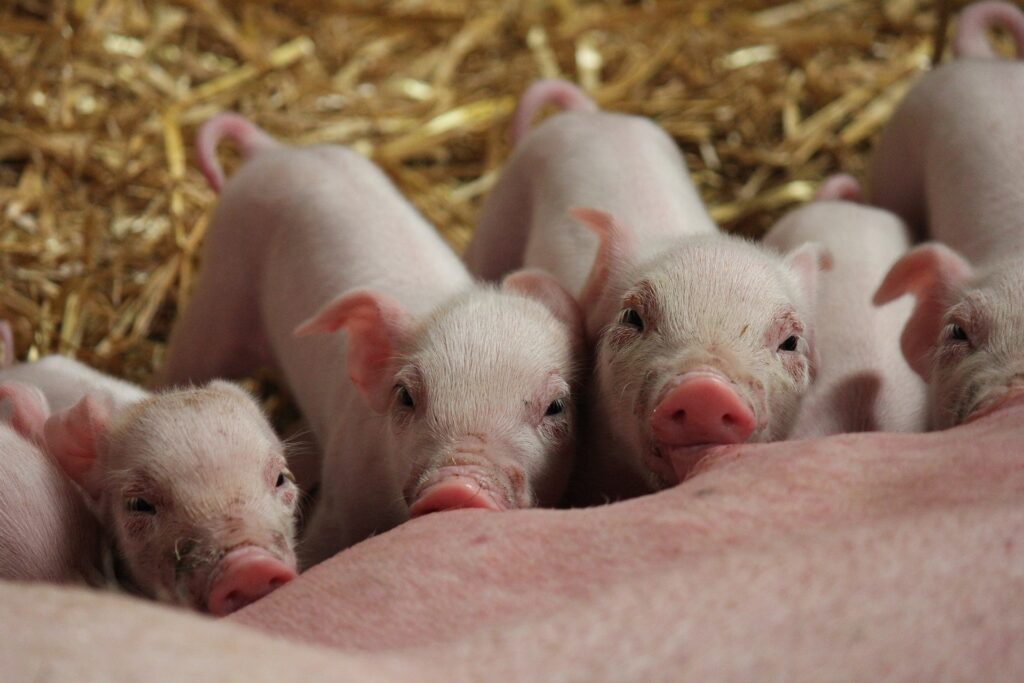

Understanding the challenge of gestation and lactation in swine
Stress increases energy requirements (the body’s response) and reduces consumption. When the ambient temperature exceeds its comfort zone, the sow eats less and expends more energy to regulate its body temperature. Similarly, a noisy environment and frequent handling increase stress and reduce appetite. This can exacerbate body condition loss during lactation and energy deficit.
As a result, the sow draws on its body reserves during lactation, with an increased risk of influencing reproductive parameters (return to oestrus, fertility, etc.) and reduced performance in the next litter.
High energy
demands
75%
of the sow’s nutritional requirements are devoted to lactation
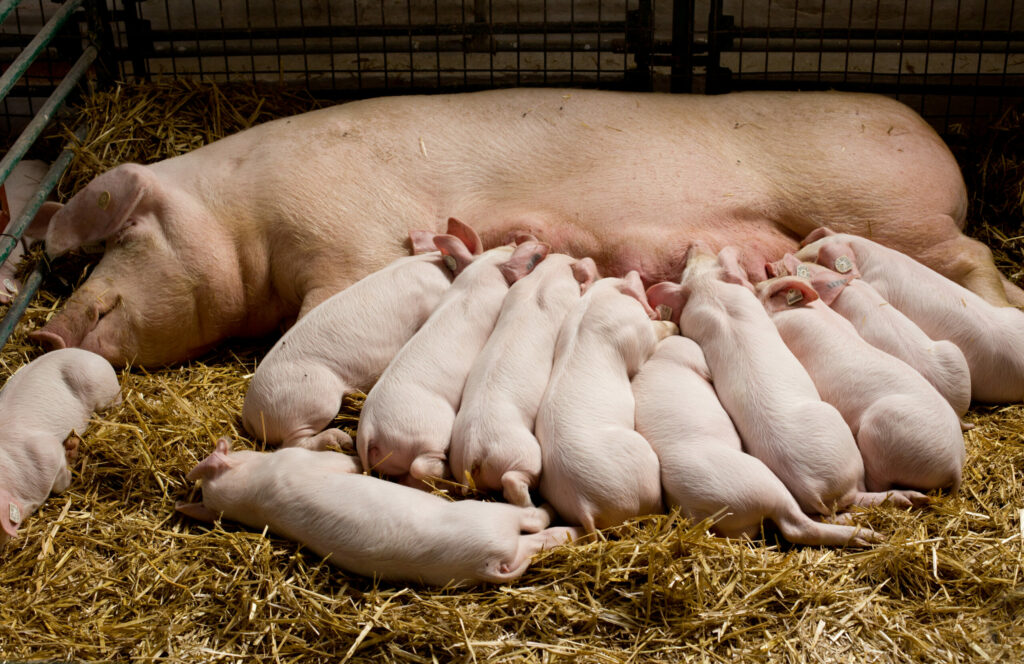
During lactation, sows may experience energy deficiency. They may have to draw on their body reserves if their feed intake is insufficient.
Impact on feed
consumption
-1 kg/sow/day
=
– 300 g/day
in litter weight gain
+ 0.7 piglets
in the next litter
Heat stress caused by high temperatures in farrowing rooms negatively affects feed intake, yet good feed intake is necessary for milk production, litter growth and preparation for the next reproductive cycle.
Consequences
on reproduction
>2mm
loss in backfat thickness during lactation
Each additional mm:
– 0.2 piglets
in the next litter
Excessive mobilisation of reserves during lactation reduces the sow’s reproductive performance (delayed oestrus, reduced fertility and embryo survival), leading to more abortions, stillbirths, fewer live births and heterogeneous litters.
More information on gestation and lactation in swine
Why does the quality of nutrition during the current lactation influence the course of subsequent lactation?
A well-fed sow during lactation won’t use too much of its body reserves. A sow in better condition at weaning will have a shorter delay in oestrus, a better ovulation rate, and better embryo implementation and survival.
Why does stress (heat, handling, environment) aggravate the situation?
Stress increases energy requirements (the body’s response) and reduces consumption. When the ambient temperature exceeds its comfort zone, the sow eats less and expends more energy to regulate its body temperature. Similarly, a noisy environment and frequent handling increase stress and reduce appetite. This can exacerbate body condition loss during lactation and energy deficit.
What is the impact on the quality of colostrum and piglets?
A sow with an energy deficit often produces colostrum of lower quality (lower in immunoglobulins and other nutrients) and in lower quantity. This can reduce the vitality of piglets, increase their early mortality, and affect their growth during the first days of life, thus compromising their performance throughout the rest of the rearing cycle.
What are the signs of energy deficiency in sows?
The most common signs in sows are: weight loss and lower colostrum/milk quality, late return to heat, and reduced reproductive performance in the next litter.
Move to optimal gestation-lactation management.
Sensory solution to improve performance by helping animals adapt well tostressful situations
Improve reproduction parameters
- Maintaining feed intake during lactation
- Increasing lactating sow efficiency
- Improving litter weight per sow
Natural antioxidant
from grape seed
and grape skin extract
Reducing
oxidative stress
- Preserving body reserves
- Improving post-weaning recovery
- Supporting fertility
Flexible, ready-to-use solution based on specific spicy actives to help limit heat discomfort
Helping with the digestion during heat discomfort
- Using energy better
- Reducing intestinal disorder
- Improving feed intake
Ready to protect sow's performance?
Discover our Challenge sheet for a comprehensive overview of the topic and concrete solutions.
Need help choosing the right product for you?
Our team is available to discuss the matter with you.
Latam Manager
Brazil
Sales Director
DACH
Europe
Asia
France
Latin America
Check out our articles

Dr Elisa Arnaud presents her work on cerebral stress in pigs at the APSA 2025 Congress
A major scientific event for the pig industry Dr

Nitrogen emissions: how can animals contribute to their reduction?
The primary objective of livestock farming will always remain