

Flock uniformity in poultry Consequences and solutions.
In poultry farming, the uniformity of birds’ weight is a key indicator that is often underestimated. It reflects the ability of a flock to develop uniformly: all animals must progress through the different physiological stages synchronously.
A lack of uniformity in a poultry flock can have significant consequences on several levels, often underestimated at first but costly in the long run.
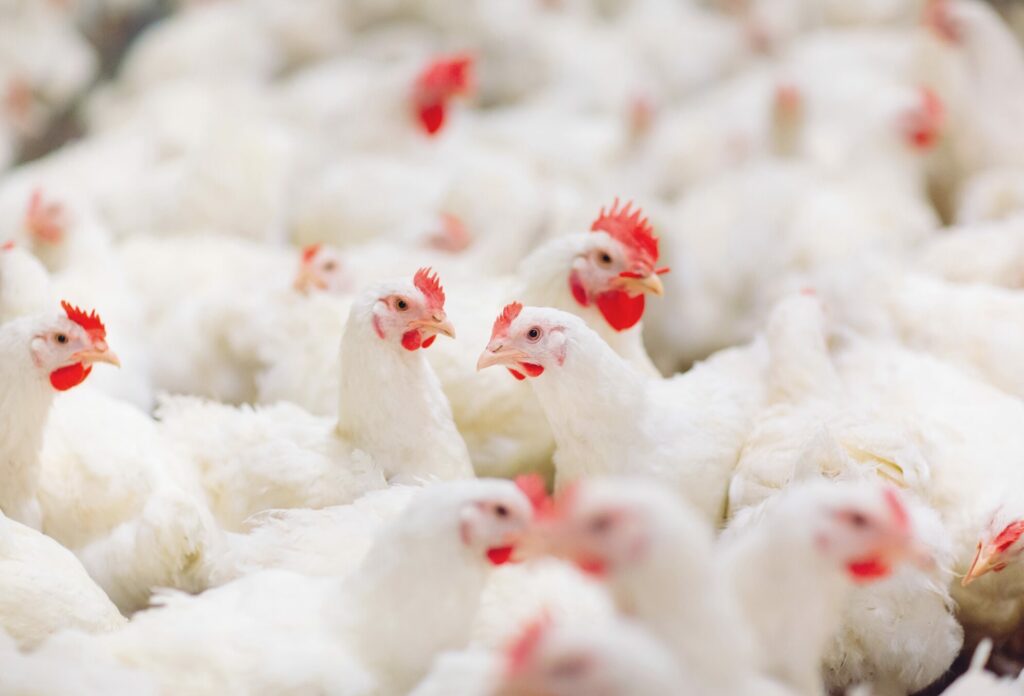
A successful start for flock uniformity
First 7 days
=
10%
of final weight
The first days of life are decisive for uniformity. All chicks must quickly access water and feed, under optimal conditions of temperature and comfort. A heterogeneous start creates early gaps that are difficult to correct later on.
Ensuring equal access to feed and water
Up to
+0.3 points
in feed conversion ratio
Even a small weight gap between individuals leads to increased competition for access to feed and water. Differences amplify quickly: the weaker birds fall behind, while the strongest overconsume, resulting in a loss of flock control.
A direct impact on broiler profitability
Up to
€1500 loss
(for 20,000 broilers)
Heterogeneity results in reduced profitability: degraded feed conversion ratios, non-compliant weights, downgrades, and more complex management. Conversely, a uniform flock enables optimal valuation of each animal and maximized economic performance.
More informationy on Flock uniformity in poultry
Why is flock uniformity a key indicator in poultry farming?
Uniformity is a direct reflection of the level of technical management on the farm. A homogeneous flock means that animals express their genetic potential consistently, with synchronized growth and optimized nutrient utilization.
On the contrary, high variability complicates daily management: adjusting feeding programs, weight heterogeneity at slaughter, and increased health risks. In practice, good uniformity helps secure performance, improve the predictability of results, and maximize the overall profitability of the flock.
When temperature rises, the animal’s response is rapid: appetite decreases in order to reduce metabolic heat production. This reduction in feed intake is often the first visible indicator of heat stress and typically occurs before any measurable decline in animal performance.
In both broilers and layers, the impact of heat stress is immediate, affecting growth rate, feed efficiency, egg production and flock uniformity. Without an adapted nutritional and management strategy, these effects can persist and lead to significant economic losses.
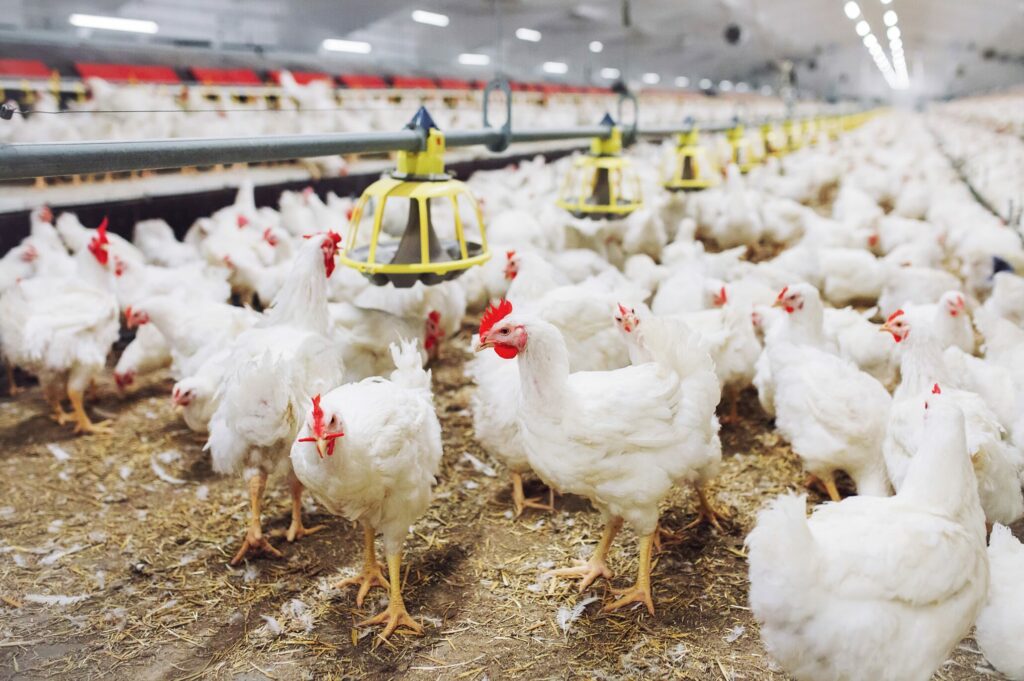
What are the main factors influencing flock uniformity in poultry?
Uniformity relies on two key factors, which result from a balance between several key elements:
Good feed intake right from the strat
Early feed intake is another determining factor, which depends on the chicks’ behavior. Chicks often arrive on farm after having hatched already 1 to 3 days before and feeding on their own body reserves. Getting them to consume feed after their arrival as quickly and synchronously as possible is a major challenge.
At the same time, water consumption increases sharply, becoming the primary means of thermoregulation, often at the expense of feed intake.
Feed efficiency in poultry production
Nutrition plays a central role in feed efficiency: quality of raw materials, homogeneity of the feed, and matching nutrient supply to physiological needs.
Access to feed and water is also crucial, especially at the start of the cycle when gaps build up quickly.
Finally, gut health is a key lever: inefficient or disrupted digestion leads to differences in nutrient absorption between individuals. These factors interact strongly, and even a slight imbalance can trigger a cascade of growth gaps that are difficult to correct later on.
How can flock uniformity be improved in practice?
Improving uniformity requires a comprehensive and proactive approach. It starts from day1, with particular attention paid to chick homogeneity, rearing conditions, and early stimulation of feed intake.
The nutritional formulation must be precise and adapted to the physiological stages, with particular attention to digestibility and consistency of the feed distributed. In parallel, maintaining good gut statusis essential to ensure homogeneous and maximized nutrient absorption. The use of targeted nutritional solutions can help support metabolism, reduce individual variability, and stabilize performance over time.
Redefine your control over uniformity

Boosting early feed intake
- Improve attraction to the feed and appetite stimulation
- Making every bird eat
- Better growth from the start

Feed intake efficiency
- Better uniformity response
- Improve average daily gain (ADG)
- Reduce feed conversion ratio (FCR)
Need help choosing the right product for you?
Our team is available to discuss the matter with you.
Latam Manager
Brazil
Sales Director
DACH
Europe
Asia
France
Latin America