
Automatic milking system gaining popularity
Automated milking systems (AMS) have been commercially available for more than 20 years and are now gaining increasingly more interest from farmers. According to the localities, it is estimated that 10 to 25% of dairy farms own an AMS.
Initially, the most enticing aspect of an AMS to a farm manager is relative to the labour reduction from the daily milking routine. However, an AMS has the potential to be more than a substitute of equipment for labour. Automatic sensors, particularly those that monitor udder health, milk production, reproductive status, feed intake, and body weight changes allow to monitor health and production of each cow in greater details.
One of the major advantages of using AMS is the increased milking frequency, which is the main factor leading to higher productivity. Independently of the milking system and the parity, cows milked more frequently typically produce greater quantities of milk compared to cows milked twice daily. Indeed, Mayakrishnan Vijayakumar et al (2017) showed an increasing milk yield for 2, 3 or 4 milkings compared to once-a-day milking with Holstein dairy cows. Similarly, other authors reported that increasing milking frequency from two to three times resulted in a 10% to 30% increase in milk production.
Factors influencing cow’s voluntary behaviour to visit AMS
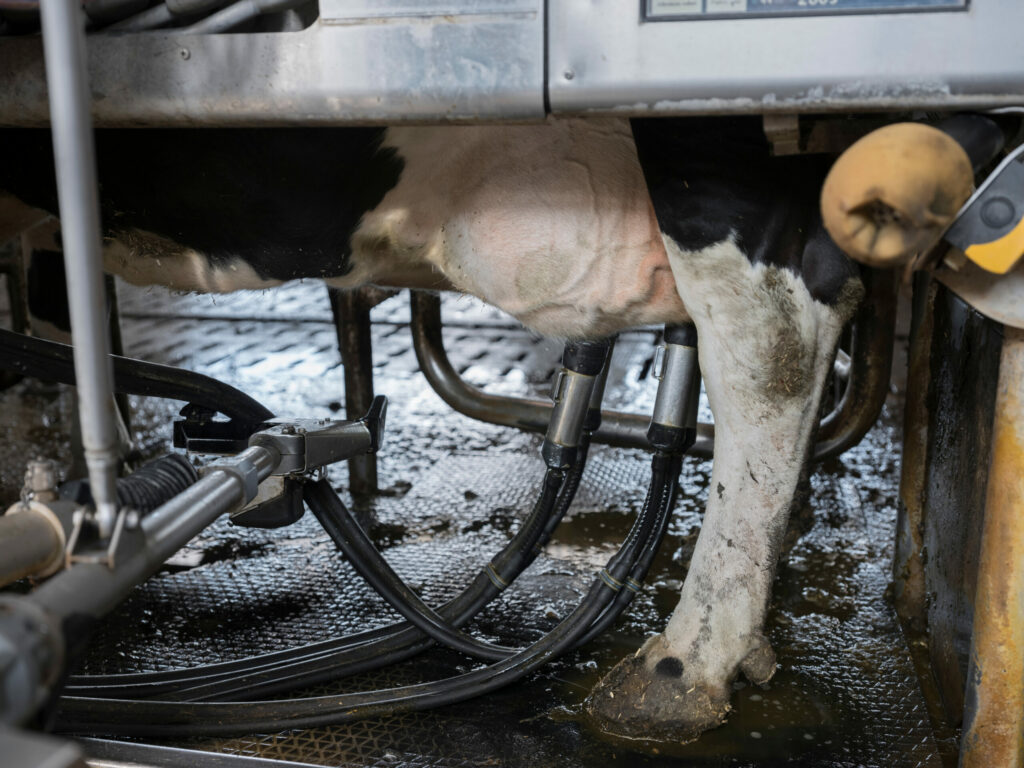
Independently of the AMS loading, the time efficiency and the time usage of robotic milking are strongly influenced by cows’ behaviour. Indeed, AMS utilisation requires cows to be more self-motivated compared to conventional parlour.
However, some studies have found higher levels of aggressive behaviours such as stepping and kicking in AMS than in conventional milking parlour (Broucek and Tongel, 2015). Stepping frequency during milking represents an indicator of general discomfort and missed milkings due to failed attachments; this increases milking time and makes the number of milkings go down especially for primiparous cows experiencing AMS for the first time (Broucek et al., 2008).
The design of the traffic system in the barn is also important to take into consideration to facilitate both high AMS visit frequency and provide adequate access to lying stalls and feed. A few researchers have indicated that forced cow traffic encourages more visits to AMS and less need to fetch the cows compared to free cow traffic (Ketelaar-de Lauwere et al., 1998). However, the cows in the forced-traffic situation have generally more milking failure visits compared with free traffic system. Thus, the average successful milking frequency is not such different between both systems (Gygax et al., 2007). Moreover, in forced traffic, some surges in the number of cows in the waiting area are often observed at time of high AMS use. This increases social competition for AMS access and generates stress, especially for lower-ranking cows. It has been demonstrated that low-ranking cows are forced by social competition to visit the AMS at times that are not preferred (Hopster et al., 2002). This is especially true when AMS loading is hight. Usually, one AMS can milk 60-75 cows per day. Higher number of cows/AMS generates competition and psychosocial stress and impairs the flowability of the circulation of cows. This level of competition at the entrance is a critical issue as prolonged standing time negatively impact the resting, ruminating, and eating time and thus productivity (Gomez and Cook, 2010; Charlton et al., 2014).
In the other side, cows in free traffic system sometimes show reduced use of AMS and need more farmers intervention for fetching (L. Munksgaard et al.,2011). Indeed, this system relies more on cows’ voluntary behaviour to visit AMS, and acting on concentrate attractivity and palatability is key to motivate cows visiting AMS more frequently.
Knowing all this previous constatations, cows’ behaviour represents one of the most substantial concerns to act on to improve AMS popularity and profitability (Broucek and Tongel, 2015).
A transversal approach to improve AMS visits
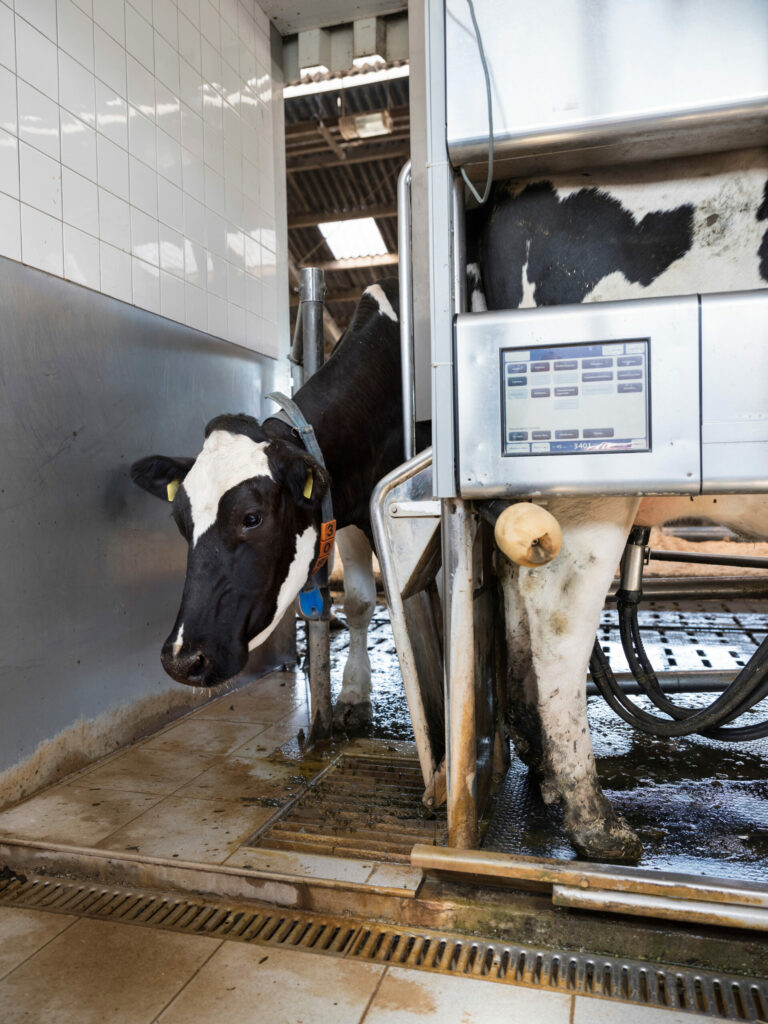
Cows’ motivation to visit AMS is strongly dependent on their previous experience around milking. Two main aspects can be considered to improve cows’ experience with AMS according to what was mentioned above:
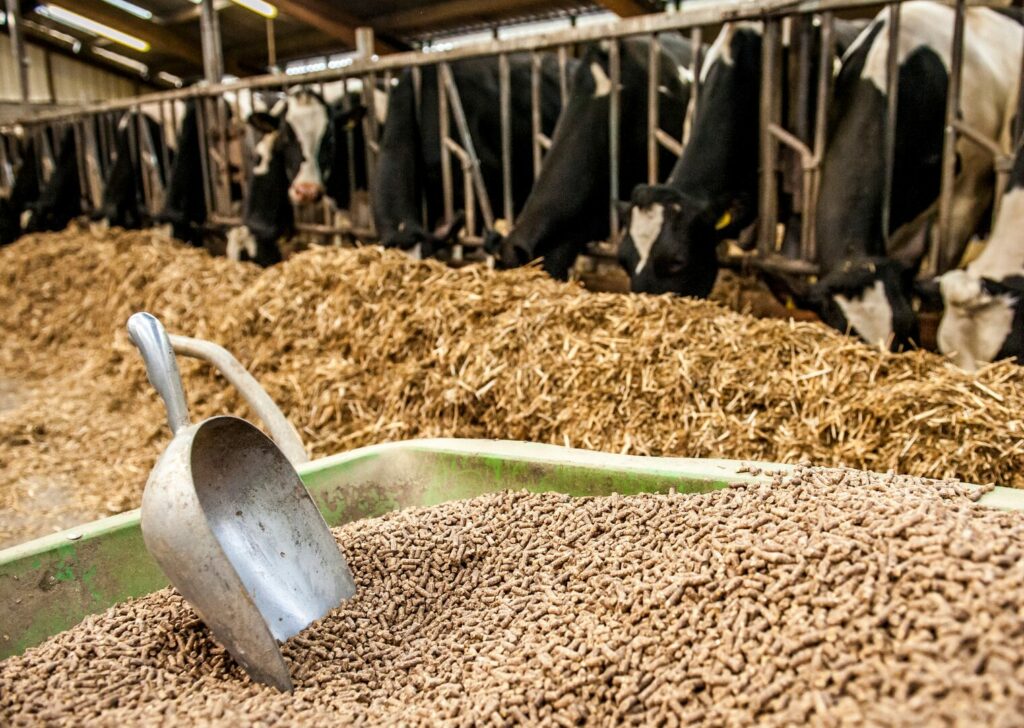
- The palatability of the concentrates fed at the AMS plays a crucial role in attracting cows. Several studies have demonstrated a strong preference of cows for sweet, citric, herbaceous, and vanilla tastes. Working on the hedonic value associated to concentrate taste and smell is a way to satisfy cow’s reward circuit and win their loyalty to the AMS.
- Stress around milking: the discovery and learning of AMS as well as competition for AMS access are stressful situationsnegatively associated with milking events and impairing both motivation to be milked and productive behaviours. This is especially true with primiparous cows which enter the lactating group for the first time; this psychosocial stress makes them less receptive to learning. A specific profile of orange essential oil (OEO) has shown to improve animal resiliency during chronic or acute stress factors (Coutens et al.,2020). Active molecules inside improve brain serotoninergic activity which mitigate stress response by dampening overactivation of brain areas associated with fear, anxiety, and stress. Therefore, animals are better able to confront stressful situations and express their full potential as they are more resilient. Trials showed that supplementing cows with OEO around a stressful situation such as regrouping can:
- decrease competitive behaviours by 45% highlighting its potential to improve milking fluidity and thus milking frequency.
- alleviate the negative impact of stress on productive behaviours like eating, ruminating, and lying.
- consequently, improve milk production by 13% on primiparous cows leading to a ROI of 9:1.
Combining flavourings to OEO efficient on behaviour can create synergetic effects, making it a complementary approach to enhance the overall efficiency of dairy cows in AMS systems.
A trial was conducted in an European farm with both kind of actives. In this farm, the average AMS free time was around 11% and a tendency to increase the milking frequency (+2%) was observed despite higher AMS loading in experimental periods. Moreover, less refusals were observed with increasing AMS visits. These results suggest:
- increased motivation to visit the AMS.
- better milking fluidity and less competition to access the AMS. Thus, cows used milking robot more efficiently; one visit to the AMS lead more frequently to a successful milking.
These results highlight the potential of this complementary approach to make the AMS use more efficient whatever the situation.
FAQ – Dairy Cows, Behaviour and Automated Milking Systems (AMS)
Motivation depends also on the palatability of the feed provided at the robot, stress related to discovering the AMS and competition for access, and a barn traffic system that allows smooth access. Improving these factors increases voluntary visits.
Feed palatability plays a crucial role in attracting cows to the robot. Working on taste and smell stimulates the reward system and encourages more frequent visits.
Forced traffic increases visits and reduces the need to fetch cows but results in more milking failures and higher competition in waiting areas. Free traffic requires more human intervention but causes fewer milking failures. The average frequency of successful milkings remains similar between both systems.
Stress can be reduced through supplementation with a specific profile of orange essential oil (OEO) and by avoiding overloading the AMS (more than 60–75 cows). Competitive behaviors are reduced, improving milking flow.
Yes. Competitive behaviors can be reduced by 45 % with a specific profile of OEO, so as stress negative impact on eating, rumination, and lying, and milk production can increase by 13 % in primiparous cows.
Better stress management and improved feed palatability can generate an ROI of 9:1 due to increased milk production (+13 % in primiparous cows).
More milkings generally lead to higher milk yield: 2, 3, or 4 milkings per day produce more milk than one milking. Increasing from 2 to 3 milkings per day raises production by 10 % to 30 %.
Yes. Primiparous cows are more stressed, less receptive to learning the robot, have more stepping movements, and experience more milking failures but benefit greatly from a supplemention in OEO (+13 % milk).
An AMS can generally handle 60 to 75 cows per day. Above this, competition increases and cow traffic flow deteriorates.
Improving feed palatability and supplementing with OEO reduces stress and competitive behaviors, enhancing milking flow, visit frequency, and successful milkings.